
Now Unified: Manage Firewalls, Access Points, and Switches in One Platform

Eliminate tool sprawl and manage your entire network from one unified console
SonicWall Unified Management now brings firewalls, access points, and switches together into a single platform, giving MSPs and IT teams a centralized place to manage security and network infrastructure. That means fewer consoles, faster troubleshooting, and more consistent operations across every tenant.
Security teams face constant pressure to do more with less: more customers, more threats to monitor, and expanding networks to manage. However, one of their biggest operational challenges isn't the security itself; it's fragmentation.
Managing firewalls, endpoints, wireless networks, and switching infrastructure as separate systems slows down operations. It creates blind spots, increases complexity, and makes it harder to deliver consistent, reliable protection at scale. Switching between portals and manually correlating events across different systems takes time, causes fatigue, and can lead to missed critical alerts.And now, that unified view extends even further.
One Platform for Security and Network Control
What is SonicWall Unified Management?
SonicWall Unified Management offers a centralized platform for monitoring tenants, managing devices, tracking alerts, and controlling licensing, all in one place. It aims to make operations easier while enhancing security through shared visibility and context across the entire environment.
But it's more than a convenience. Centralizing visibility means your team benefits from shared contextual intelligence across every enforcement point in the environment. When your firewall data, endpoint activity, and network infrastructure are all surfaced through a single interface, you stop reacting and start anticipating. Threats that might go unnoticed in a fragmented environment become visible, correlated, and actionable.
And now, that unified view extends even further.
Now Integrated: Access Points and Switches
SonicWall Unified Management now includes native management for access points and switches, bringing core network infrastructure into the same platform as your security controls.
This means MSPs and IT teams can now manage:
- Firewalls
- Endpoints
- Wireless access points
- Network switches
All from a single console.
There’s no need to pivot between tools like Wireless Network Manager (WNM) or Network Security Manager (NSM). Everything is integrated, accessible, and aligned in one place.
For MSPs supporting multiple clients, this is especially significant. Rolling out new access points or switches across dozens of tenants used to mean navigating multiple portals and reconciling separate inventories. Now it's a unified workflow, with consistent policies and visibility from day one.
Simplify Operations and Strengthen Visibility
How does unified management improve security and operations?
Bringing access points and switches into Unified Management isn’t just a convenience; it fundamentally streamlines how security teams operate. With everything in one platform, teams gain:
- End-to-end visibility across security and network infrastructure
- Simplified deployment of SonicWave access points and SonicWall switches across tenants
- Real-time monitoring of device health, firmware, ports, and connectivity
- Streamlined operations with role-based access and centralized alerting
Instead of stitching together insights across platforms, security admins and MSPs get a complete, cohesive view of the environment for faster troubleshooting, stronger policy enforcement, and more efficient day-to-day management, without the overhead typically associated with managing enterprise-grade infrastructure.
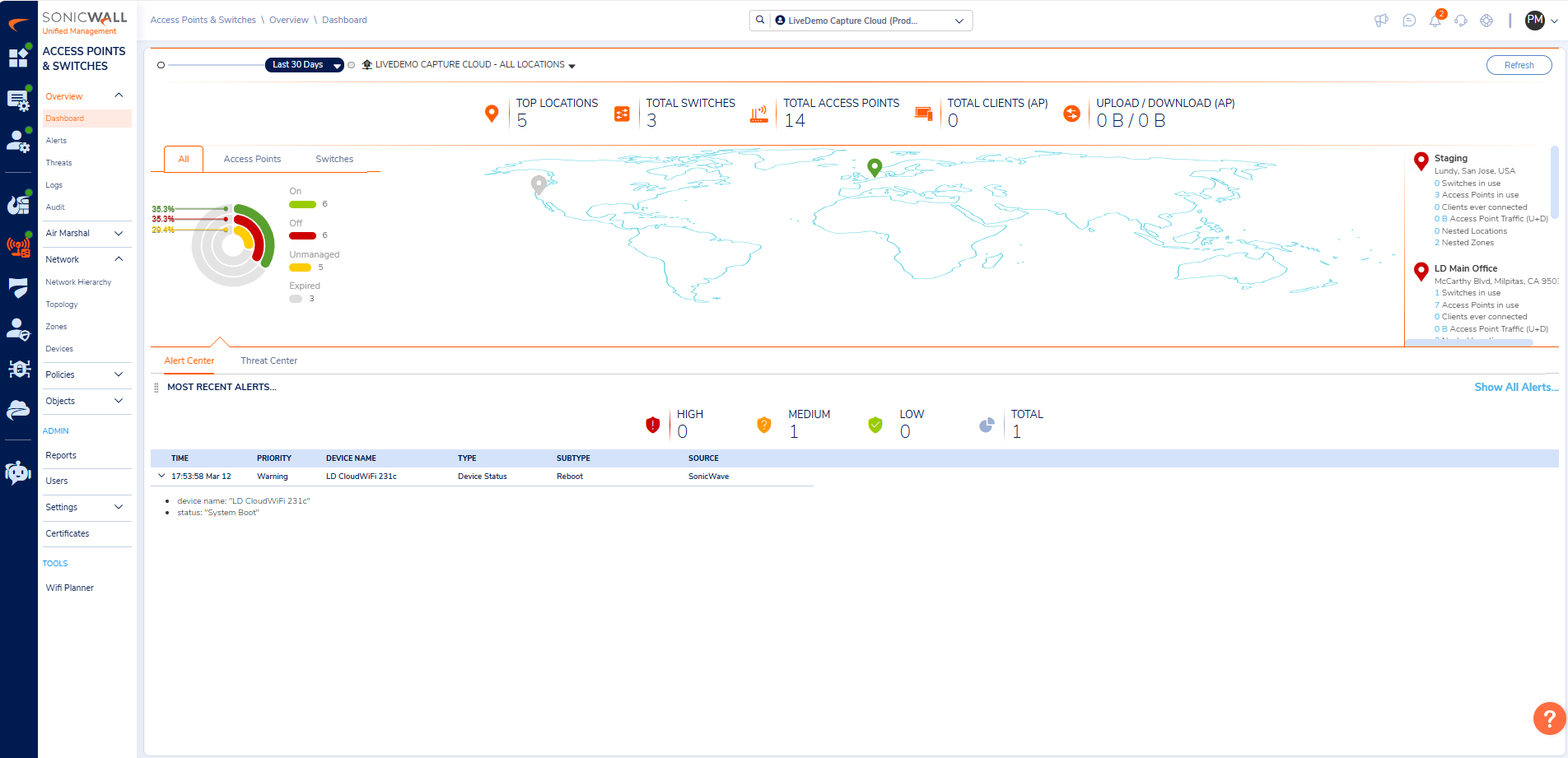
For MSPs, this is the kind of simplicity that changes the economics of service delivery. When complexity is reduced and operational workflows are tightened, they can take on more clients, respond faster to issues, and deliver a higher level of service without adding headcount.
Why Centralization Matters
When network infrastructure and security tools live in separate systems, gaps are inevitable. Integration closes those gaps.
By bringing switches and access points into SonicWall Unified Management, teams can:
- Reduce operational overhead across their client base
- Improve deployment consistency so every tenant benefits from the same standard of protection
- Respond faster to incidents with unified alerting and correlated device context
- Maintain a stronger, more proactive security posture that keeps pace with a constantly evolving threat landscape
This is what it looks like when technology, active threat intelligence, and partner expertise come together: not just a better tool, but a better outcome for every business you protect.
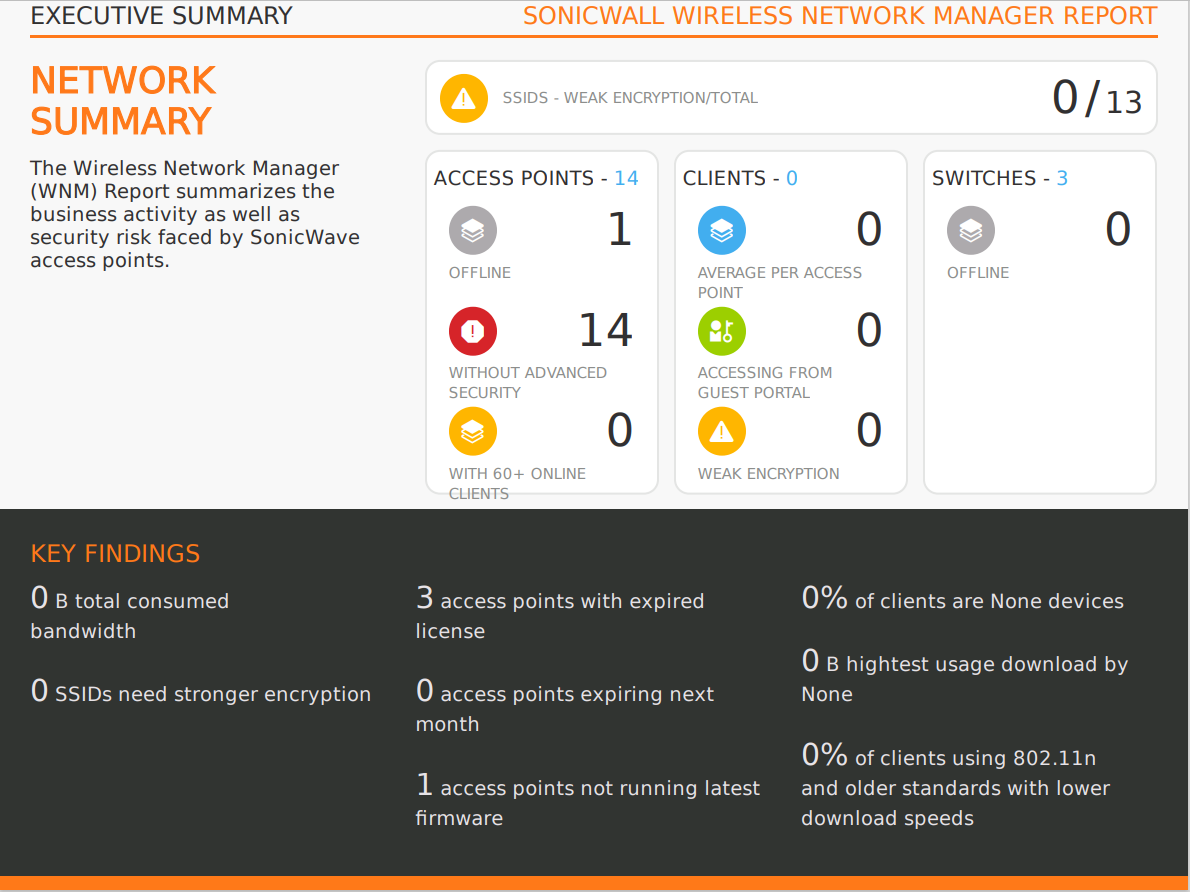
Get Started
Access point and switch management is now available directly within SonicWall Unified Management. Log in to start managing your full network and security stack from a single platform.
Log in to SonicWall Unified Management or start your SonicWall journey here.
Share This Article
.jpg%3Fwidth%3D315%26height%3D420&w=640&q=75)
An Article By
An Article By
Bikramjit Majumdar
Principal Product Manager
Bikramjit Majumdar
Principal Product Manager
Bikramjit is a Principal Product Manager at SonicWall with 19+ years of experience across network, security, and cloud technologies. He specializes in platformization, AI-driven innovation, and Zero Trust, combining strategic vision with deep technical expertise to build scalable, intelligent security platforms. At SonicWall, he leads unified platform initiatives, integrates AI into security workflows, and advances Zero Trust architectures to deliver simplified, outcome-driven security. Previously, he was a Senior Product Manager at Cisco, contributing to Cloud and Security Service Edge (SSE) innovations. He is also a CCIE (Data Center and Security) #22234.

