
The Future of Network Security Operations Is Unified

Complexity and sprawl are vulnerabilities in their own right. It’s time to re-center your cybersecurity.
The Fragmentation Problem No One Saw Coming
IT teams and service providers are under intense pressure as networks grow more complex, attacks become more sophisticated and customers expect security to “just work.” But the tools needed to deliver this experience are spread across multiple portals, logins and workflows. Over the past decade, security operations have expanded across the board. Tools, vendors and dashboards have seen increasing sprawl, and each one comes with its own set of complexities. Each new threat vector introduces another solution; every architectural shift—cloud, hybrid work, distributed environments—adds an extra layer to manage. While capabilities have grown, security teams now struggle to keep track of the very sprawl that was supposed to protect them.
Fragmentation has emerged as an unexpected challenge in the fight against cyber threats. Misconfigurations account for about 60% of all network breaches, with nearly 90% involving some type of human error, while fatigue greatly contributes to the rising talent shortage. Across organizations, we observe the same patterns emerging:
- Multiple consoles performing overlapping or redundant tasks
- Manual processes repeated across distributed environments
- Inconsistent policies across sites and devices
- Gaps created not by attackers, but by operational fatigue
- Limited visibility across the full threat surface
This is why the next era of cybersecurity will not be defined by individual tools, but by how well they work together.
Unification Is the Next Security Imperative
Consider the operational burden of managing separate systems for firewall configuration, wireless devices, endpoint security, reporting and analytics, inventory, licensing, and other related security solutions. Each system introduces a potential blind spot that raises the risk of inconsistency and drains time from already overloaded teams. Attackers exploit weaknesses in both architecture and operations. Misconfigurations, missed alerts, outdated rules and disconnected datasets are now among the leading causes of breaches. No wonder 94% of MSPs are actively evaluating unified security platforms to streamline operations, reduce risk and gain more consistent control.
A unified platform is more than a single login; it’s a fundamentally different operating model that enables:
- Global policy synchronization across distributed environments
- Centralized telemetry and reporting to help identify risk patterns early
- AI assistance that flags configuration issues before they cause outages
- Automation at scale, reducing manual effort and human error
- Lifecycle simplification, from procurement to deployment to support
- Standardized security posture, no matter how many sites or tenants you manage
This is the architecture modern networks require: secure by design, horizontally integrated and operationally consistent.
Why Unified Platforms Matter: Security, Efficiency, and Growth
When security operations are centralized and integrated, organizations unlock benefits that go far beyond convenience. Unified platforms transform how teams see, manage, and protect their environments, delivering measurable improvements across security, efficiency, cost, and innovation. Key advantages include:
- Enhanced Security: When operations are unified, security teams can see the full picture. By correlating telemetry from firewalls, wireless devices, endpoints, and users, organizations achieve comprehensive visibility into the entire threat landscape. Global policies can be enforced consistently, misconfigurations can be identified earlier, and AI-driven recommendations can assist teams in resolving issues proactively. Instead of responding to isolated alerts, teams can recognize patterns, predict risks, and bolster defenses across the entire system.
- Streamlined Operations: With a single interface for deployment, provisioning, policy management, monitoring, and reporting, teams can operate at scale with much less manual effort. Multi-tenant environments are easier to manage thanks to zero-touch deployments, secure segmentation, and shared oversight that support growth without increasing complexity. Automated alerts for expirations, inconsistencies, and updates ensure built-in compliance, while unified search and reporting tools make daily tasks more efficient.In fact, 75% of IT professionals report that application integration saves time, and 70% say it drives operational efficiency.
- Lower Total Cost of Ownership: Efficiency directly reduces overall costs. Combining tools reduces licensing and training expenses, automation eliminates repetitive tasks, and improved configuration practices decrease the likelihood of breach-related incidents. The outcome is a leaner, more resilient security operation where teams can focus on strategic initiatives instead of managing multiple consoles or addressing preventable issues.
- AI-Driven Opportunities:Unified platforms that incorporate AI further enhance ROI. By deploying AI across the network and security stack, MSPs can improve efficiency, strengthen threat detection, and proactively manage security. In fact, a recent survey found that 56.4% of MSPs are leveraging AI-powered cybersecurity solutions to generate new revenue streams, turning operational intelligence into tangible business growth.
SonicWall Unified Management
The shift toward unified security operations is a broad industry movement, but not all solutions deliver unification with equal depth or maturity. SonicWall has made strategic investments to ensure its platform aligns with this future.
Through SonicWall Unified Management, organizations gain a fully integrated operating environment that consolidates firewall, wireless, endpoint, reporting, analytics, inventory and policy management into a single, consistent experience. With the complete capabilities of Network Security Manager (NSM) now integrated directly into this unified framework, teams can operate with greater visibility, speed and accuracy across multiple sites or tenants.
NSM enables MSPs to:
- Streamline multi-tenant firewall operations
- Deploy and enforce policies at scale
- Gain actionable insights via AI-driven intelligence
- Trace and remediate threats from endpoint to firewall quickly
In an era where complexity threatens security, unified platforms are not just advantageous; they are essential. SonicWall Unified Management fulfills this vision and prepares organizations for the next decade of cybersecurity defense.
Watch our on-demand webinar to see how SonicWall Unified Management and Network Security Manager (NSM) bring visibility, control, and efficiency to firewall management.
See SonicWall Unified Management in Action
Experience the power of streamlined security management at your own pace. Take a self-guided tour of SonicWall Unified Management and explore how centralized visibility, automated workflows and intuitive controls make it easier to manage and secure modern networks.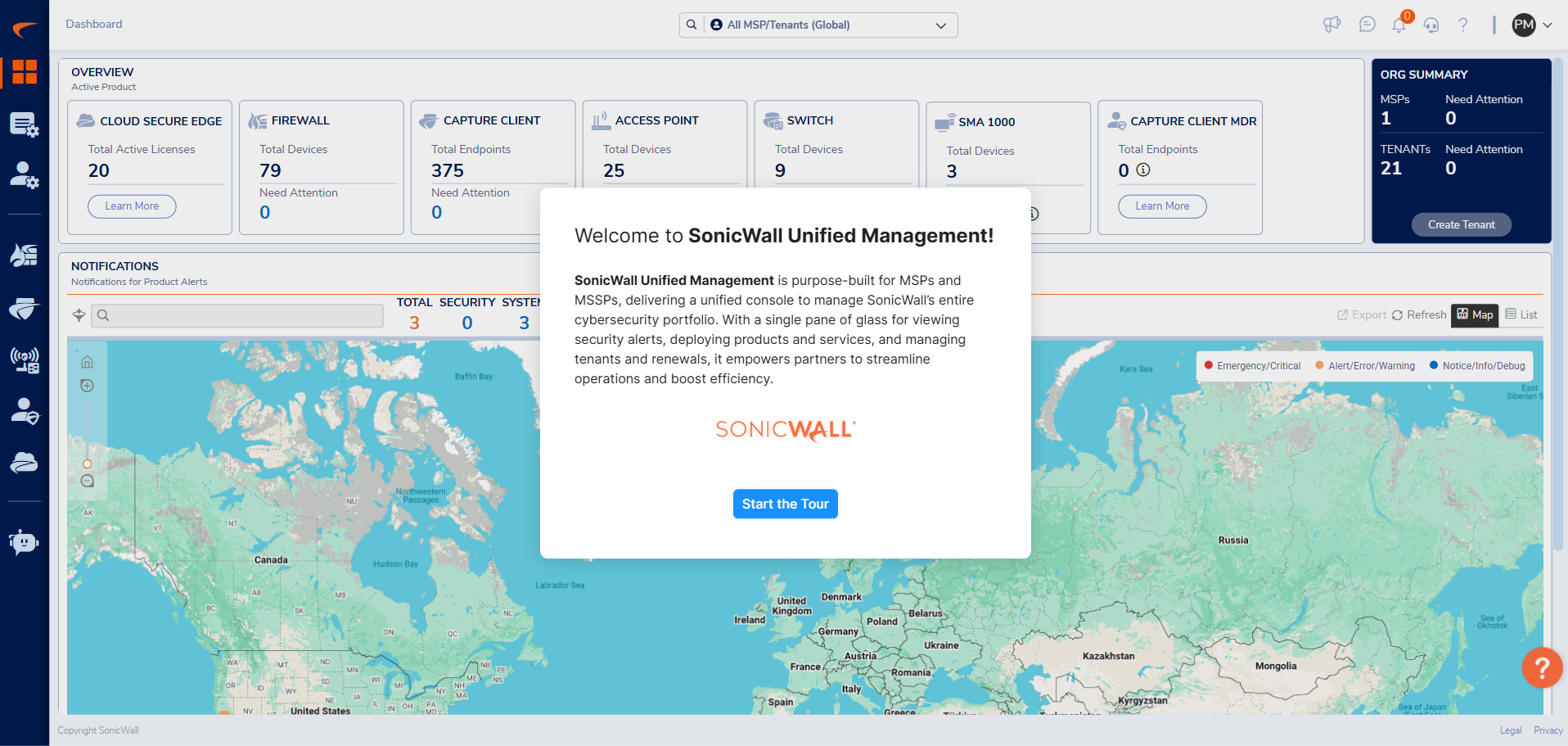
Share This Article

An Article By
An Article By
SonicWall Staff
SonicWall Staff


