
Modernize Your VPN with SonicWall Cloud Secure Edge

Traditional VPNs are no longer enough. See how SonicWall’s Cloud Secure Edge delivers scalable, secure access with VPNaaS and Zero Trust.
What Is a Traditional VPN?
VPNs have been a cornerstone of network security for more than 30 years. Most firewalls support both IPsec and SSL VPNs, and they've long been standard for secure remote access.
Before the pandemic, VPN usage was typically limited to departments like Sales, IT, and Executive Leadership. But COVID-19 changed that landscape dramatically. With hybrid work becoming the norm, the majority of users now operate outside the traditional network perimeter. As a result, traditional VPN architectures are struggling to keep up with today’s security and performance demands.
Challenges of Traditional VPNs
Security Challenges: Security is the number one concern when it comes to traditional VPNs. Because these devices must be exposed to the internet to function, they create a significant attack surface. Virtually all NGFW vendors have experienced vulnerabilities in their VPN components. SOCRadar offers a snapshot of how serious this problem is today.
Another major concern is lateral movement. Traditional VPNs often grant full network access, allowing threat actors to move freely once inside. These solutions also lack continuous authorization, further increasing risk.
Performance Challenges Due to Centralization: Traditional IPsec and SSL VPNs rely on centralized architecture, which introduces several challenges—chief among them being a single point of failure. As remote user counts rise, many VPN gateways struggle to handle the load, resulting in dropped connections, latency, and a poor user experience.
Not Built for the Modern Workforce: Today’s workforce relies on a mix of personal and corporate devices, and frequently collaborates across organizational boundaries. VPNs typically depend on device certificates for authentication, limiting use to company-managed devices. As a result, contractors, partners, and BYOD users are often unable to connect through traditional VPN tools.
Poor Mobile Experience: VPNs were designed with the assumption of stable, long-lived connections. On mobile devices, this doesn’t hold up. When a phone goes to sleep or changes networks, the VPN drops and must reconnect. Most mobile apps aren’t VPN-aware, leading to slow app response and user frustration.
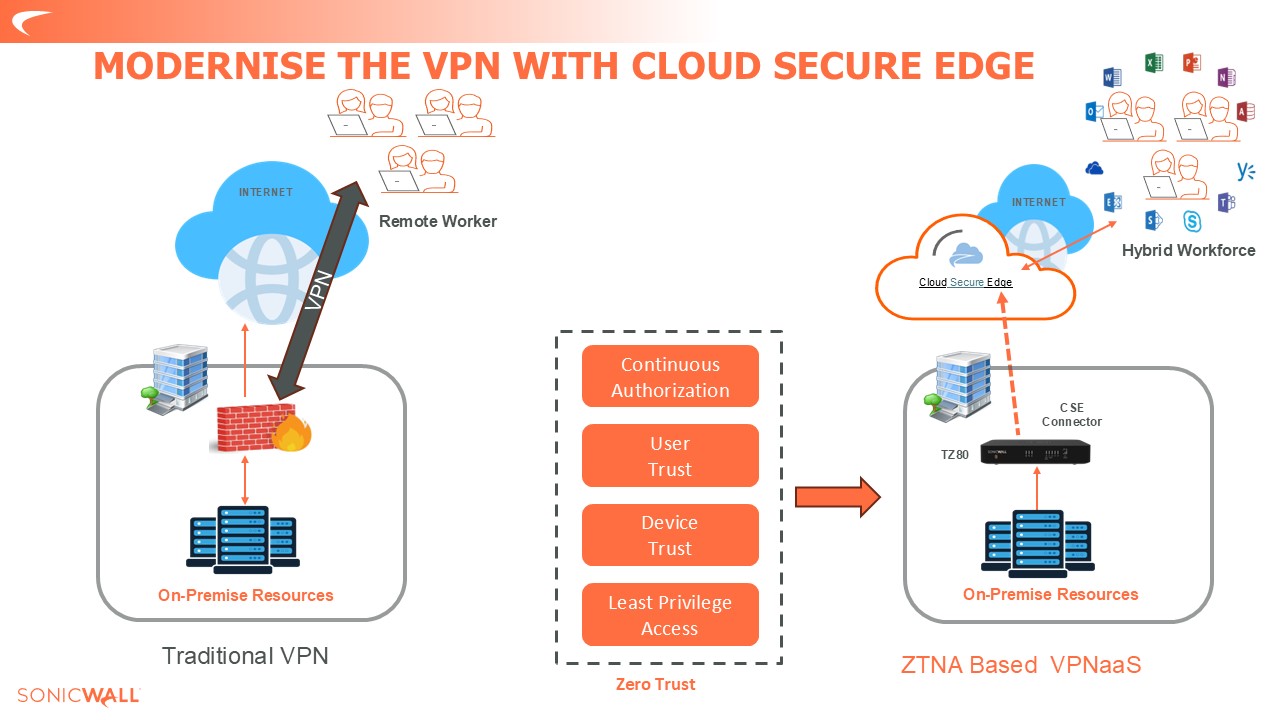
What Is VPNaaS (VPN as a Service)?
VPNaaS is a modern remote access solution that allows employees to securely connect to cloud and on-premises resources from any location or network. By leveraging cloud infrastructure, VPNaaS delivers better security, scalability, performance, and user experience compared to traditional VPNs.
Key Benefits of VPNaaS
Stronger Security Architecture: VPNaaS platforms implement end-to-end encryption, Zero Trust Network Access (ZTNA), and automated updates to enhance protection. Integrated threat detection systems help identify and mitigate risks in real time.
Improved Performance and Speed: Global Points of Presence (PoPs) ensure that users connect through the closest gateway, reducing latency and improving performance. Dynamic bandwidth allocation and redundancy improve availability and user experience.
Enhanced Scalability: VPNaaS removes the limitations of traditional VPNs by offering elastic cloud resources that adapt to user demand. Traffic is intelligently distributed to avoid overloading any single PoP, supporting consistent performance during peak usage.
Simplified Management: VPNaaS eliminates the need for dedicated VPN hardware. Centralized dashboards make it easier to manage users, configure access, and onboard new employees with minimal disruption.
How Can SonicWall Help Customers Modernize VPN Today?
SonicWall has expanded its Security Service Edge (SSE) capabilities through the acquisition of Banyan Security, bringing advanced Zero Trust functionality into its portfolio. This positions SonicWall to deliver VPNaaS offerings that replace traditional VPNs with modern, scalable ZTNA solutions.
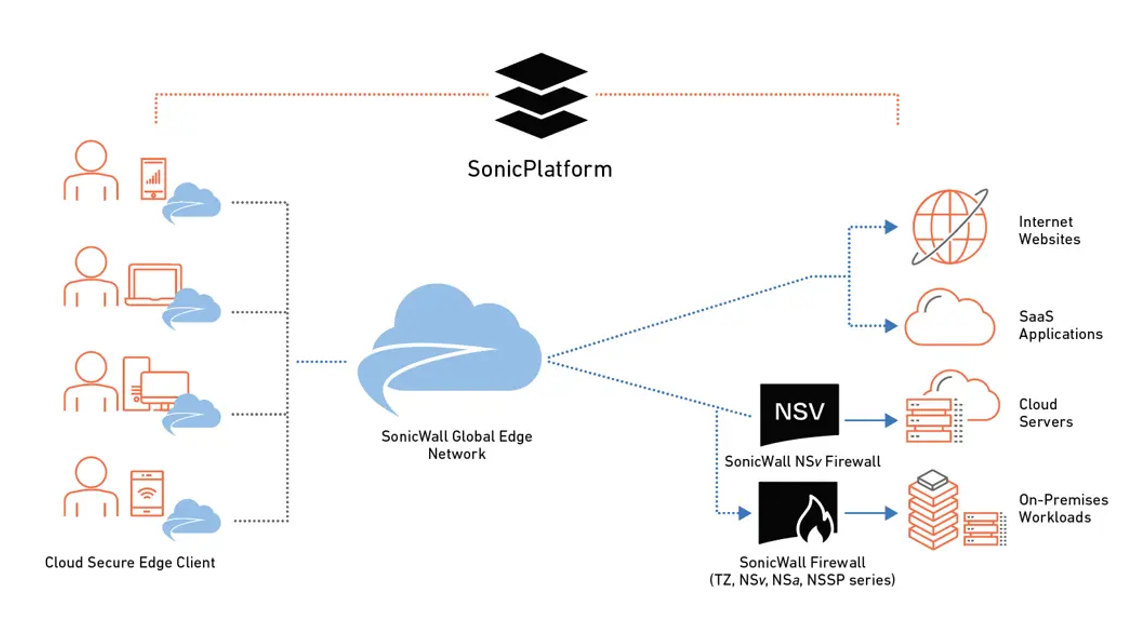
The SonicWall NGFW Cloud Edge Connector integrates on-premises and cloud networks to provide secure, high-performance connectivity. This "connector" technology, built into our next-generation firewalls, delivers several key advantages:
Trust No One, Always Verify: A Zero Trust approach reduces the attack surface by verifying every connection attempt, even from internal devices.
Simplified Remote Access with VPNaaS: With Cloud Secure Edge (CSE) integration in SonicOS 7.1.2, employees can securely access authorized applications from any device, anywhere. All access policies are centrally managed in the cloud. The CSE Connector is supported on Gen 7 and above firewalls.
Better User Experience: ZTNA is easy to deploy. Secure access can be enabled with just a few clicks and a simple private resource definition on your SonicWall firewall.
Benefits of Using SonicWall Cloud Secure Edge
- Leverages SonicWall firewalls to enable VPNaaS with ZTNA
- Empowers partners to proactively address customer security gaps
- Supports evolving secure remote work needs
- Adapts to diverse IT environments
Upgrade Now
SonicWall customers have an excellent opportunity to upgrade from traditional VPNs to a VPNaaS model. With built-in Zero Trust capabilities, this modern solution offers secure, reliable, and seamless access to internal apps and cloud services—no matter where users work.
We'd love to hear from you if you have any questions or comments. Contact us today to get started.
Share This Article

An Article By
An Article By
Rajesh Agnihotri
Rajesh Agnihotri

